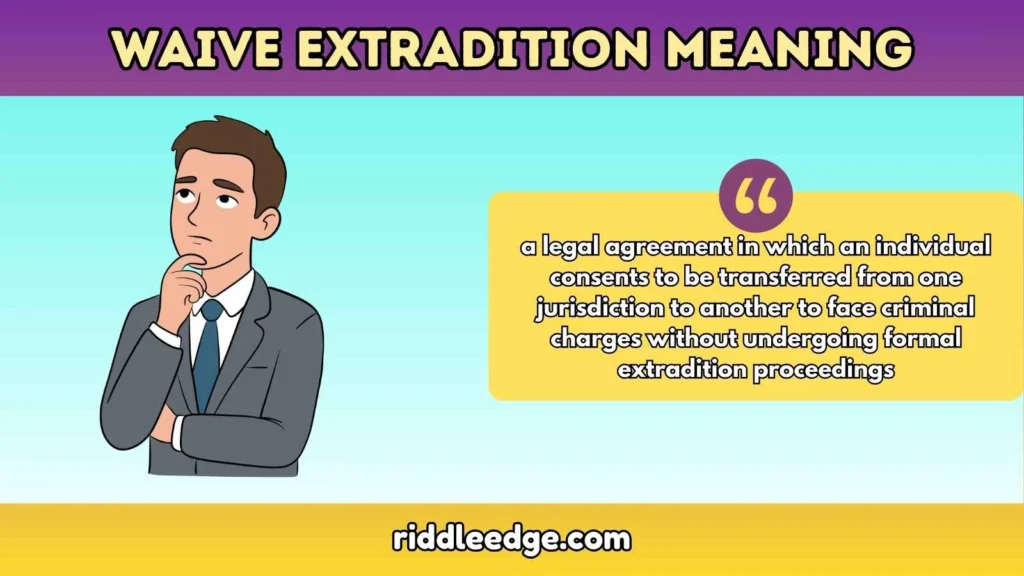
Waive extradition meaning is a legal concept that often appears in arrest cases, court hearings, and criminal justice discussions—yet it remains confusing for many people 😕.
If you’ve ever heard a judge ask whether someone wants to “waive extradition” or seen this phrase in a legal document, you’re not alone in wondering what it truly means and why it matters.
This guide explains the waive extradition meaning in plain, human language—without legal jargon overload. We’ll walk through real-world examples, explain rights and consequences, explore when and why someone might waive extradition, and help you understand the risks and benefits involved. 🧠
What Does Waive Extradition Mean? 🔍
To understand the waive extradition meaning, let’s break it down step by step.
Extradition is the legal process of transferring a person from one jurisdiction to another so they can face criminal charges or serve a sentence. When someone waives extradition, they are voluntarily giving up their legal right to fight or delay that transfer.
In simple terms:
Waiving extradition means agreeing to be sent back to another jurisdiction without a formal extradition hearing.
This decision is usually made in court and must be voluntary. Once extradition is waived, the transfer typically happens much faster ⏩.
Plain-Language Definition
- Waive = give up a legal right
- Extradition = transfer of a suspect or offender
- Waive extradition = agree to be transferred without resistance
Why Extradition Exists in the First Place 🌍
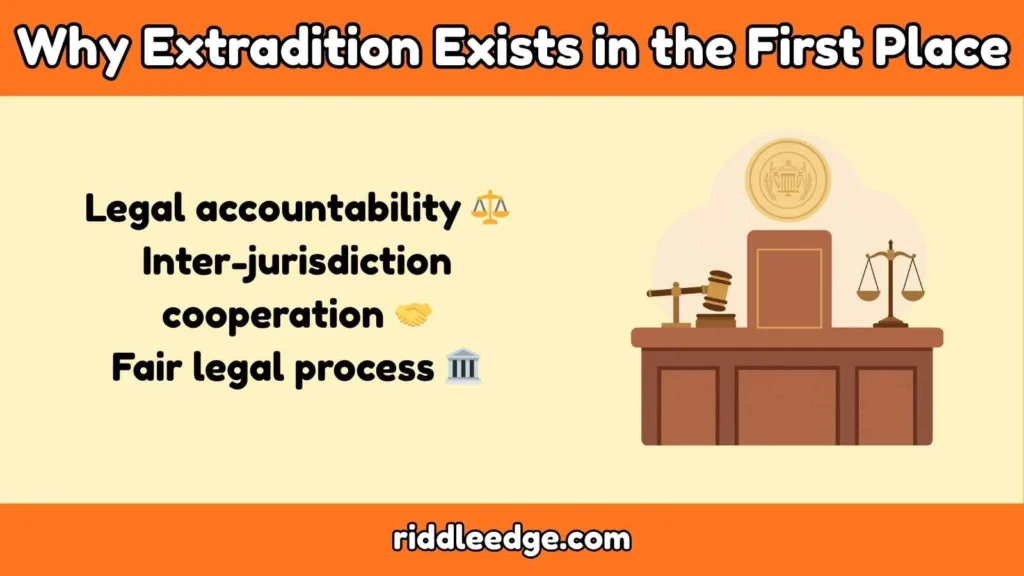
Before fully grasping the waive extradition meaning, it helps to understand why extradition laws exist at all.
Extradition ensures that people cannot avoid legal responsibility simply by crossing borders. Without extradition laws, suspects could escape justice by relocating to a different region.
Extradition systems are built on three key principles:
- Legal accountability ⚖️
- Inter-jurisdiction cooperation 🤝
- Fair legal process 🏛️
Waiving extradition simplifies this process—but it also removes certain protections.
Legal Rights You Give Up When You Waive Extradition 🚨
Understanding the waive extradition meaning requires recognizing the rights involved.
When you do not waive extradition, you generally have the right to:
- Request a formal extradition hearing
- Challenge identity or documentation
- Delay transfer through legal motions
- Consult legal counsel
When you waive extradition, you voluntarily give up most or all of these rights.
Key Rights Waived
| Right | What Happens When Waived |
|---|---|
| Extradition hearing | No formal hearing takes place |
| Transfer delay | Immediate or expedited transport |
| Jurisdiction challenge | Cannot dispute the requesting authority |
| Appeal options | Usually eliminated |
This is why courts typically ensure the waiver is knowing, intelligent, and voluntary.
Why Would Someone Waive Extradition? 🤔
At first glance, the waive extradition meaning might sound risky—but there are situations where it makes sense.
Common Reasons
- Faster resolution of the case ⏱️
- Reduced time in temporary detention
- Legal strategy advised by an attorney
- Desire to resolve outstanding warrants
- Avoiding prolonged jail stays
For some individuals, waiving extradition is a strategic choice rather than a mistake.
Real-Life Example of Waiving Extradition 📘
Here’s a simplified example to clarify the waive extradition meaning:
A person is arrested in one state due to a warrant from another state. Instead of requesting an extradition hearing, they agree in court to waive extradition. They are transferred within days rather than weeks.
This decision speeds up the process but removes the chance to challenge the transfer.
Is Waiving Extradition Permanent? 🔒
In most cases, yes. Once the waiver is signed and accepted by the court, it cannot be easily reversed.
That’s why judges often ask clear questions to confirm understanding:
- Do you understand your rights?
- Are you waiving extradition voluntarily?
- Have you consulted legal counsel?
This protects both the court and the individual.
Waive Extradition vs Fight Extradition ⚔️
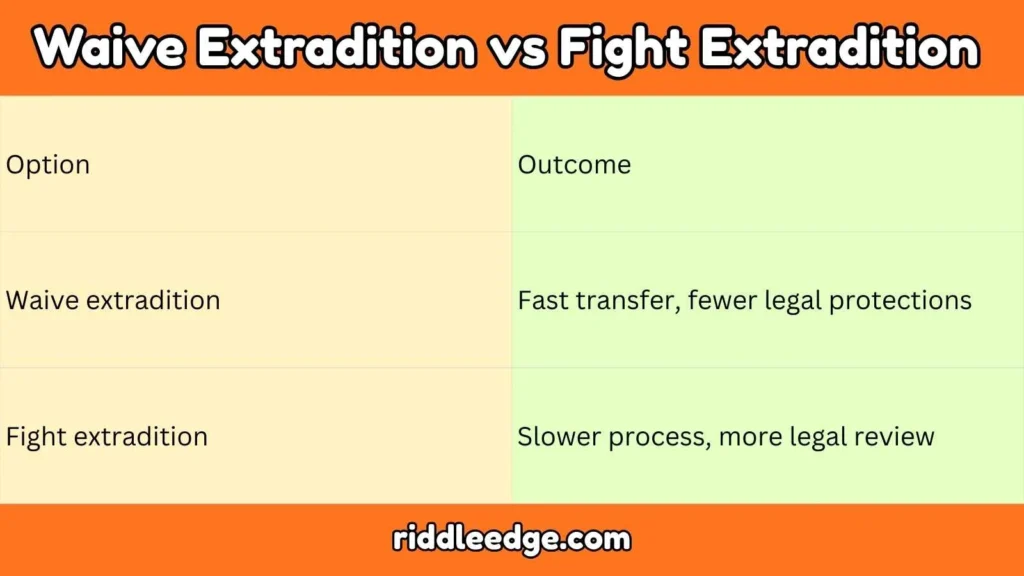
To fully understand the waive extradition meaning, it helps to compare both options.
| Option | Outcome |
|---|---|
| Waive extradition | Fast transfer, fewer legal protections |
| Fight extradition | Slower process, more legal review |
Neither option is universally better—it depends on the situation.
Legal Language Used in Extradition Waivers 📄
Legal documents often use formal language that can be intimidating. Here’s how the waive extradition meaning usually appears:
- “The defendant knowingly and voluntarily waives extradition rights.”
- “The accused consents to immediate transfer.”
Despite the wording, the meaning is straightforward when explained clearly.
Common Myths About Waiving Extradition ❌
There are many misunderstandings around the waive extradition meaning. Let’s clear them up.
- Myth: Waiving extradition means admitting guilt
Truth: It does not affect guilt or innocence - Myth: You lose all legal rights
Truth: Only extradition-related rights are waived - Myth: It guarantees a lighter sentence
Truth: Sentencing is separate
Origin and Legal Evolution of Extradition 🕰️
The concept behind the waive extradition meaning evolved from early justice systems designed to prevent escape from accountability.
Historically, extradition agreements were slow and complex. Waivers were introduced to streamline the process when individuals chose cooperation.
Today, waiving extradition is considered a lawful procedural option—when done knowingly and voluntarily.
Risks and Consequences You Should Know ⚠️

Waiving extradition is serious. Understanding the waive extradition meaning includes recognizing possible downsides.
- Limited time to prepare a defense
- Immediate transport to another facility
- Reduced negotiation leverage
This is why legal advice is strongly recommended before agreeing.
How Courts Ensure the Waiver Is Valid 🏛️
Courts follow strict procedures to ensure the waive extradition meaning is fully understood by the person waiving it.
- Verbal confirmation in court
- Written waiver documents
- Opportunity to consult counsel
These safeguards help prevent coercion or misunderstanding.
Related Legal Concepts Worth Understanding 📚
To deepen your understanding, explore related legal topics like:
- Arrest warrants
- Bail hearings
- Jurisdiction authority
- Due process rights
FAQs
Is waiving extradition mandatory?
No. Waiving extradition is always voluntary and must be approved by a court.
Does waiving extradition affect my criminal case?
No. It only affects how you are transferred, not the charges themselves.
Can I change my mind after waiving extradition?
Usually no. Once accepted, the waiver is final.
Is waiving extradition faster?
Yes. It significantly reduces delays in transfer.
Should I talk to a lawyer first?
Absolutely. Legal guidance is strongly recommended.
Final Thoughts:
The waive extradition meaning is ultimately about choice. It allows individuals to voluntarily give up certain procedural rights in exchange for speed and simplicity—but not without consequences.
Understanding this concept empowers you to make informed decisions and avoid costly misunderstandings. Knowledge is protection.
If you found this guide helpful, explore more legal explanations and definitions to stay informed and confident. ✅

I love exploring the meaning behind words and ideas, turning simple thoughts into clear and engaging content. At Punswave, I focus on explaining meanings in an easy and interesting way for everyone.