Ever received a message that simply said “s/u?” and felt confused? 😕 You’re not alone. Modern texting is packed with shortcuts, and s/u meaning in text is one of those slang terms that can feel unclear at first glance.
In this in-depth guide, you’ll learn exactly what s/u means, where it comes from, how people actually use it in real conversations, and how to respond naturally without sounding awkward. 💬
Whether you’re decoding a casual DM, understanding online slang, or improving your digital communication skills, this article will give you complete clarity—no guessing required. ✅
What Does S/U Mean in Text? 🤔
The most common s/u meaning in text is:
S/U = “Swipe Up”
It’s a short instruction often used on social media or in messaging to tell someone to swipe up on a story, message, or screen to see more content.
In some contexts, s/u can also mean:
- Shut Up (usually playful or sarcastic)
- Speak Up (less common, context-dependent)
Understanding the context is key. Let’s break each meaning down clearly. 🔍
The Most Common Meaning: S/U = Swipe Up ⬆️
By far, the most popular s/u meaning in text is “Swipe Up.” This usage exploded with the rise of social media stories.
When someone says “s/u”, they’re usually asking you to swipe up to:
- View a link 🔗
- Watch a longer video 🎥
- Open a product page 🛒
- See additional content 📖
It’s short, fast, and perfectly suited for quick digital interactions.
“Just posted the full details—s/u to see everything 👀”
In this case, s/u clearly means Swipe Up.
Alternative Meaning: S/U = Shut Up 😅
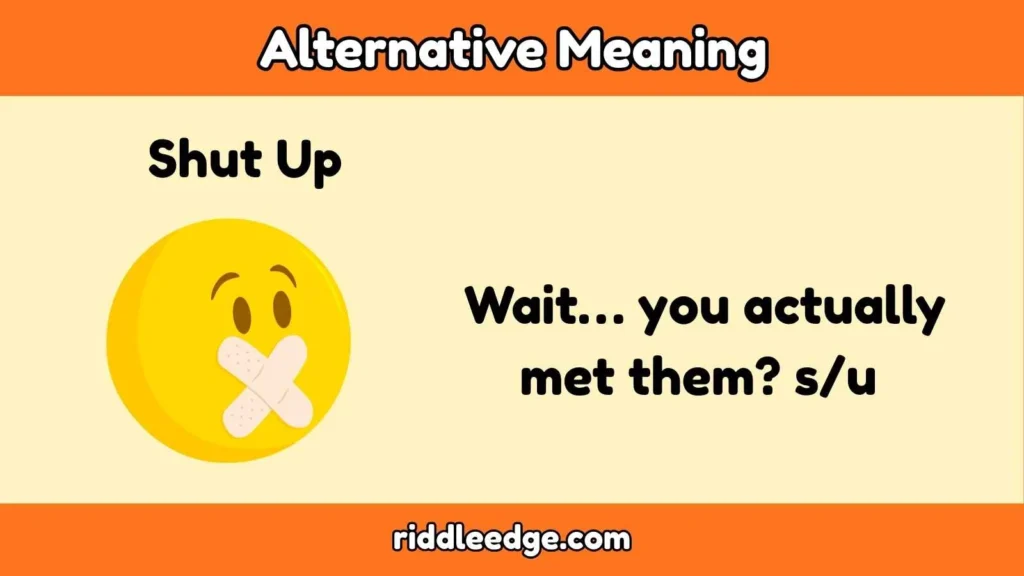
Another meaning of s/u in text is “Shut Up.” But don’t panic—this version is often playful, not rude.
It’s usually used between friends when reacting to something shocking, funny, or unbelievable.
“Wait… you actually met them? s/u 😂”
Here, s/u expresses surprise, not aggression.
⚠️ Important: Tone matters. Using s/u as “shut up” with the wrong person can sound disrespectful.
Rare Meaning: S/U = Speak Up 🎤
In some niche or professional conversations, s/u can stand for “Speak Up.”
This meaning is rare and usually appears in:
- Group chats
- Online discussions
- Voice or audio-related conversations
Because it’s uncommon, always look for surrounding clues before assuming this meaning.
How Context Changes the Meaning of S/U 🧠
The s/u meaning in text depends heavily on context. The same two letters can mean different things in different situations.
| Context | Meaning |
|---|---|
| Social media story | Swipe Up |
| Joking chat with friends | Shut Up (playful) |
| Discussion or meeting | Speak Up |
Always read the tone, emojis, and message intent before replying.
Origin of S/U in Texting 📜
The term s/u gained popularity as texting evolved toward shorter, faster communication.
Key factors behind its rise include:
- Character limits ⏳
- Mobile-first communication 📱
- Social media culture 🌐
“Swipe Up” specifically became common when platforms introduced vertical navigation gestures.
How S/U Is Used in Real Conversations 💬

Here are realistic examples showing s/u meaning in text clearly:
Example 1: Social Media
“I added the full tutorial—s/u to check it out!”
Example 2: Friends Chat
“You did WHAT? s/u 😂😂”
Example 3: Group Message
“Can’t hear you well—s/u please.”
Each example shows how tone and setting shape the meaning.
When You Should Use S/U (And When Not To) ⚖️
Using s/u correctly helps you sound natural and confident.
Good Times to Use S/U
- Casual conversations
- Social media messages
- Chats with friends
When to Avoid It
- Formal emails ❌
- Professional communication ❌
- Talking to someone unfamiliar ❌
When in doubt, spell it out.
Is S/U Rude? Understanding Tone & Intent 😊
The s/u meaning in text is not inherently rude.
What matters is:
- Who you’re talking to
- The emojis used 😄
- The overall message tone
Adding emojis or laughter softens the message significantly.
S/U vs Similar Text Abbreviations 🔄
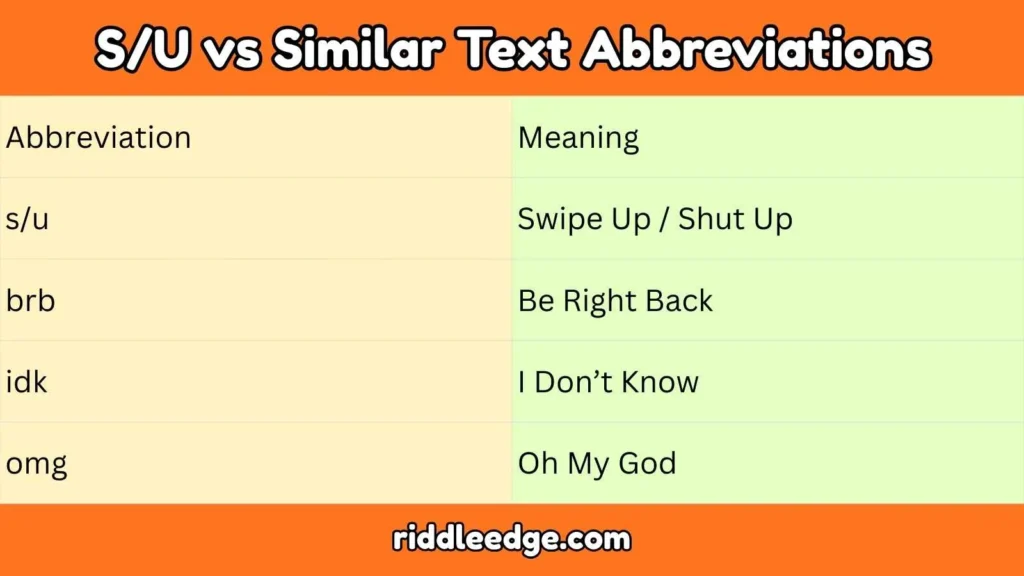
| Abbreviation | Meaning |
|---|---|
| s/u | Swipe Up / Shut Up |
| brb | Be Right Back |
| idk | I Don’t Know |
| omg | Oh My God |
These abbreviations share the same goal: faster communication.
How to Respond When Someone Texts “S/U” 📩
Your reply should match the meaning.
- Swipe Up: “Got it!” 👍
- Shut Up (joking): “Haha, I know right!” 😆
- Speak Up: “Sorry! Is this better?” 🎧
Responding naturally keeps the conversation flowing.
S/U in Different Platforms 🌍
The s/u meaning in text can slightly vary by platform:
- Stories: Swipe Up
- DMs: Swipe Up or Shut Up
- Group chats: Speak Up (rare)
Platform + context = correct meaning.
FAQs
What is the most common s/u meaning in text?
The most common meaning is Swipe Up, especially on social media.
Can s/u be rude?
It can sound rude if used incorrectly, but it’s often playful among friends.
Is s/u formal language?
No. It’s informal and best used in casual conversations.
Does s/u always mean swipe up?
No. Context matters. It can also mean shut up or speak up.
Should I use s/u in professional chats?
It’s better to avoid abbreviations like s/u in professional settings.
Final Thoughts:
The s/u meaning in text is simple once you understand context.
Most of the time, it means Swipe Up, but it can also express surprise or ask someone to speak louder.
Modern communication evolves fast.
Knowing slang like s/u helps you stay confident, connected, and clear in digital conversations. 💡

I love exploring the meaning behind words and ideas, turning simple thoughts into clear and engaging content. At Punswave, I focus on explaining meanings in an easy and interesting way for everyone.