Have you ever attended an event so grand that it left you speechless? A display so captivating it seemed larger than life?
That is the power of a spectacle 🎆. In this article, we’ll explore the spectacle meaning, its origins, examples, and the unique ways it influences culture, entertainment, and everyday life.
What Is the Meaning of Spectacle? 🤔
The word spectacle refers to a visually striking or impressive event, display, or performance. It often evokes wonder, admiration, or even shock. Spectacles can range from grand theatrical performances to simple visual experiences that captivate an audience.
In essence, a spectacle is more than just a sight—it’s an experience. It appeals to emotions, senses, and imagination, leaving a lasting impression on those who witness it.
Key Definitions of Spectacle
- Visual Display: A remarkable visual arrangement or scene.
- Performance: A theatrical or artistic presentation meant to awe.
- Cultural Event: An organized public event designed for collective amazement.
- Metaphorical Use: Situations or actions that are grandiose or attention-grabbing.
Origin of the Word Spectacle 📜
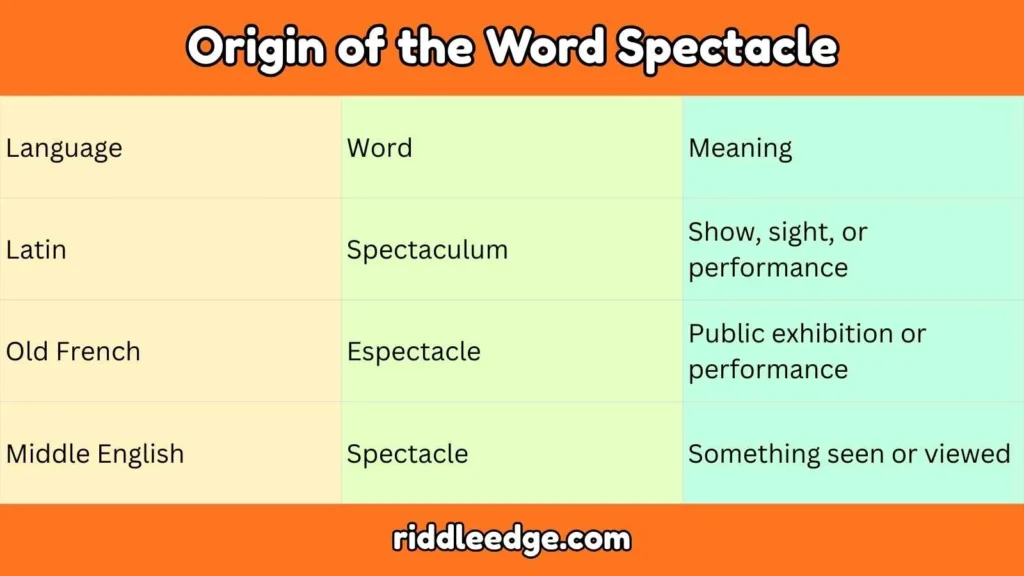
The word spectacle comes from the Latin term spectaculum, meaning “a show” or “something to look at.” Over centuries, it evolved through Old French and Middle English to capture the essence of remarkable displays, both in theater and public life.
| Language | Word | Meaning |
|---|---|---|
| Latin | Spectaculum | Show, sight, or performance |
| Old French | Espectacle | Public exhibition or performance |
| Middle English | Spectacle | Something seen or viewed |
Types of Spectacles 🎨
Spectacles are not limited to theaters or concerts. They can be categorized based on their context and impact.
1. Cultural Spectacles 🌍
These are events that reflect the values, beliefs, and creativity of a society. Examples include:
- Parades like Mardi Gras 🎉
- Religious festivals 🕯️
- Traditional dance performances 💃
2. Entertainment Spectacles 🎬
These spectacles aim to captivate and entertain audiences:
- Broadway shows 🏛️
- Movie premieres 🍿
- Live concerts 🎸
3. Political and Public Spectacles 🏛️
Leaders and organizations often use spectacles to influence public perception:
- National ceremonies 🇺🇸
- Protests or rallies ✊
- Public announcements with visual impact 📢
Examples of Spectacles in Modern Life 🌟
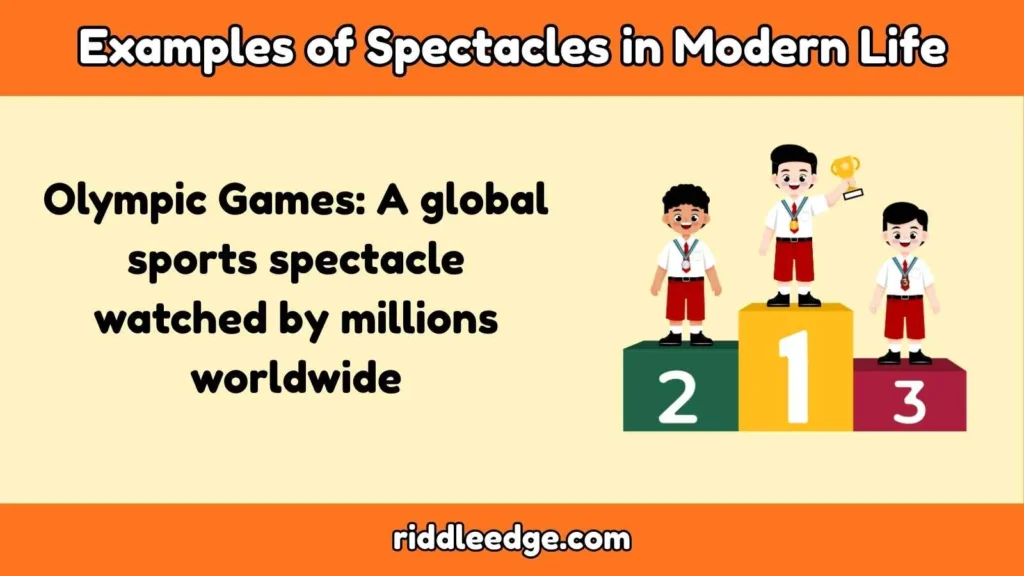
We encounter spectacles in many forms daily. Let’s look at real-world examples:
- Olympic Games: A global sports spectacle watched by millions worldwide 🏅.
- Fireworks Shows: Bursts of color that create a magical visual experience 🎆.
- Fashion Shows: High-end events combining design, music, and performance 👗.
- Movie Premieres: Red carpet events designed to dazzle and attract attention 🎥.
The Psychology Behind Spectacles 🧠
Spectacles captivate because they appeal to our innate desire for novelty, beauty, and awe. Psychologists have noted that humans are wired to notice and remember visually striking events.
Key psychological effects of spectacles:
- Emotion Triggering: Awe, excitement, and joy are common responses.
- Memory Enhancement: People remember spectacular events vividly.
- Social Bonding: Shared experiences strengthen group cohesion.
How Spectacles Shape Culture 🌐
Throughout history, spectacles have played a crucial role in shaping culture:
- Gladiator games in Ancient Rome 🏟️
- Theatrical performances in Elizabethan England 🎭
- Modern film and music festivals 🎶
They serve as mirrors reflecting society’s values, aspirations, and collective identity.
Visual Spectacles vs. Emotional Spectacles 🎨❤️
Not all spectacles are just visual. Some touch the heart and mind deeply:
- Visual Spectacles: Fireworks, parades, architecture 🏰
- Emotional Spectacles: Dramatic performances, moving speeches, humanitarian acts 💖
Famous Spectacles in History 📚
| Event | Type | Impact |
|---|---|---|
| Great Exhibition, London 1851 | Cultural & Industrial | Showcased innovation and arts to a global audience 🌏 |
| World Cup Finals | Sports | Uniting millions in global celebration ⚽ |
| Cirque du Soleil Premieres | Entertainment | Redefined modern circus with art and acrobatics 🤸 |
Spectacle in Literature and Media 📖🎥
Authors and filmmakers often use spectacles to emphasize dramatic moments and create lasting impressions.
- Shakespeare’s plays often included grand spectacles to captivate audiences.
- Hollywood blockbusters like Avengers utilize visual spectacles to engage millions.
- Epic novels like Lord of the Rings include both visual and emotional spectacles to immerse readers.
The Role of Technology in Modern Spectacles 💻✨
Technology has transformed how we experience spectacles:
- 3D and VR create immersive experiences 🎮
- LED shows and drones enhance visual impact ✨
- Streaming platforms allow global audiences to witness spectacles from home 🌐
Creating Your Own Spectacle 🎉
Want to leave an unforgettable impression? Follow these tips:
- Plan with Vision: Focus on what will captivate your audience 🧐
- Use Bold Visuals: Colors, lights, and movement create impact 🎨
- Engage Emotions: Stories and interactions make experiences memorable ❤️
- Scale Appropriately: Even small spectacles can create wonder ✨
Common Misconceptions About Spectacles ❌
- Spectacle is always grand: Not necessarily; small moments can be spectacular.
- Only entertainment matters: Spectacles can educate, inspire, and unite people.
- Visual focus is everything: Emotional depth is equally important.
FAQs
- Q1: What is the main meaning of spectacle?
A: It is an impressive or striking display that captivates an audience. - Q2: Can a spectacle be small-scale?
A: Yes! Even a small, carefully crafted event can be a spectacle. - Q3: How does spectacle influence culture?
A: It reflects societal values, entertains, educates, and strengthens community bonds. - Q4: What’s the difference between a spectacle and a performance?
A: A performance is the act, while a spectacle emphasizes grandeur and awe.
Conclusion:
Spectacles are more than just events—they are experiences that touch the senses, stir emotions, and leave lasting memories. From cultural festivals to breathtaking performances, they remind us of the beauty, creativity, and wonder in the world around us 🌎.
Next time you witness a spectacle, take a moment to savor it, reflect on its impact, and perhaps create your own for others to enjoy. Life itself can be a magnificent spectacle when we choose to see it that way!

I love exploring the meaning behind words and ideas, turning simple thoughts into clear and engaging content. At Punswave, I focus on explaining meanings in an easy and interesting way for everyone.