Have you ever received a message that ended with “JP” and paused for a second, wondering what the sender actually meant? 🤔 You’re not alone. In today’s fast-moving digital world, short forms, slang, and abbreviations dominate how we communicate. One tiny abbreviation like JP can completely change the tone of a message.
Understanding the JP meaning in text isn’t just about decoding letters. It’s about understanding intent, tone, and context. Whether you saw it in a WhatsApp chat, Instagram DM, Snapchat message, or casual SMS, this guide will break everything down in a simple, human way.
By the end of this article, you’ll know exactly what JP means in text, when to use it, when not to use it, and how it fits into modern online conversations.
What Does JP Mean in Text? 💬
The most common and widely accepted JP meaning in text is:
JP = Just Playing
When someone uses JP in a text message, they are usually telling you that:
- They were joking 😄
- Their previous message was not serious
- They didn’t mean to offend or confuse you
In short, JP acts as a tone softener. It helps avoid misunderstandings in text-based communication, where facial expressions and voice tone are missing.
JP Meaning in Texting vs Real Life Communication 🗣️
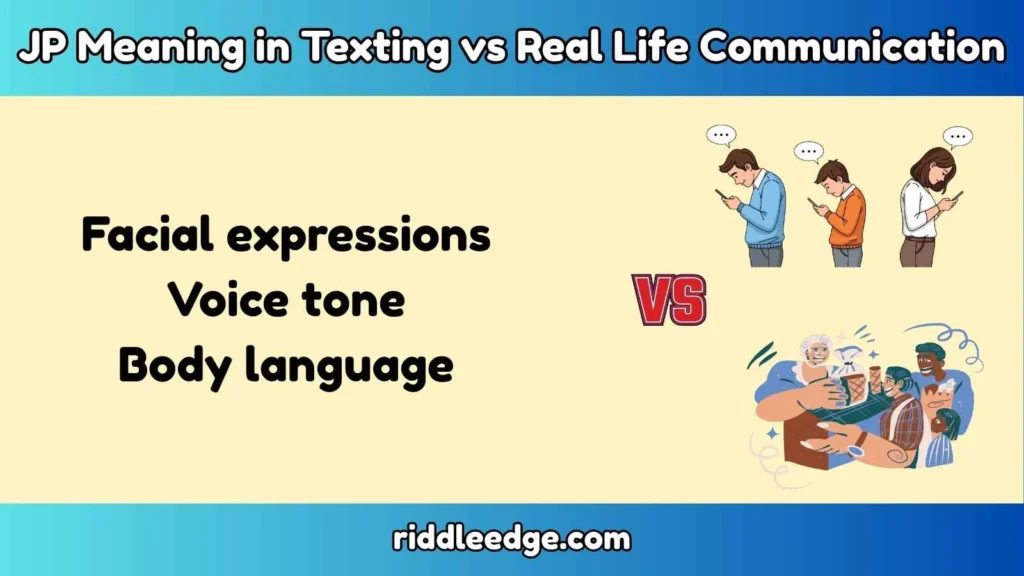
In real-life conversations, we rely on:
- Facial expressions
- Voice tone
- Body language
But texting removes all of that. This is where abbreviations like JP become powerful.
For example, sarcasm can sound rude in text. Adding JP instantly changes the message from serious to playful. This is why the JP meaning in text is so important in casual digital conversations.
Origin of JP in Text Messages 📜
The abbreviation JP comes from the phrase “Just Playing”, which has been used in spoken English for decades.
As texting became more popular in the early mobile phone era, people started shortening common phrases to save time and characters. Over time:
- “Just playing” became JP
- It spread through SMS, chat rooms, and online forums
- Later, it exploded on social media platforms
Today, the JP meaning in text is recognized globally, especially among younger users.
How JP Is Commonly Used in Text Conversations ✨
Let’s look at how people actually use JP in real chats.
1. After a Joke 😜
This is the most common usage.
Example:
“I’m never talking to you again… JP 😂”
Here, JP clearly signals that the statement was a joke.
2. To Avoid Offense 🛡️
Sometimes messages can sound harsh without context.
“You’re the worst driver ever. JP 😅”
The JP meaning in text here prevents the message from sounding insulting.
3. To Lighten the Mood 🌈
JP is often used to keep conversations friendly and playful.
JP Meaning in Text on Social Media 📲
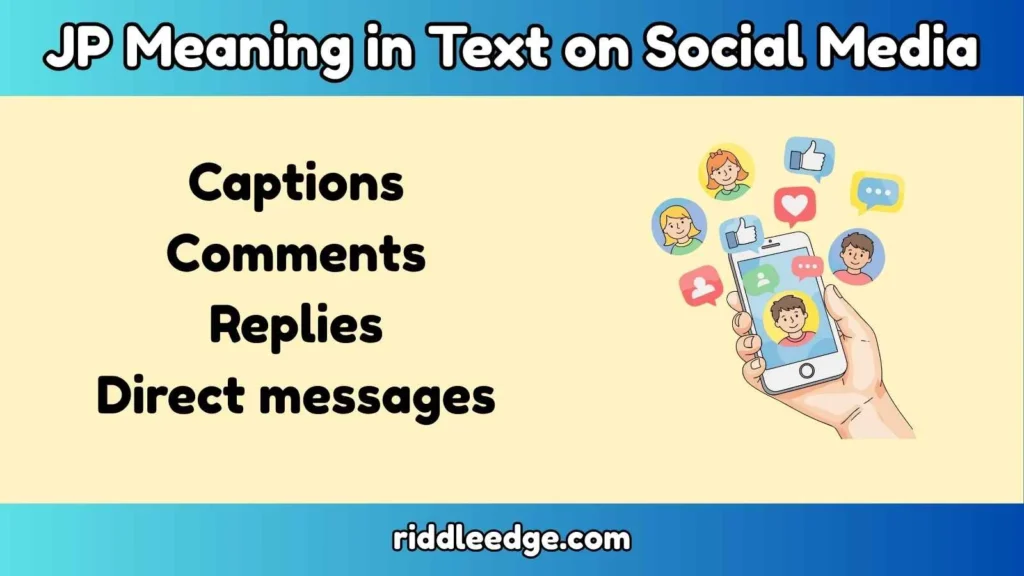
On platforms like Instagram, TikTok, Snapchat, and X (Twitter), JP is often used in:
- Captions
- Comments
- Replies
- Direct messages
Example:
“Unfollowing everyone who didn’t like my post… JP 😏”
On social media, the JP meaning in text helps maintain humor without causing drama.
Different Possible Meanings of JP (Context Matters) ⚠️
While Just Playing is the most common meaning, context can slightly change interpretation.
| JP Meaning | Context | Usage Frequency |
|---|---|---|
| Just Playing | Casual chats, jokes | Very Common |
| Just Pretending | Roleplay or sarcasm | Rare |
| Initials (Name) | Referring to a person | Context-Specific |
However, when people search for JP meaning in text, they almost always mean Just Playing.
JP vs Similar Text Slang 🔄
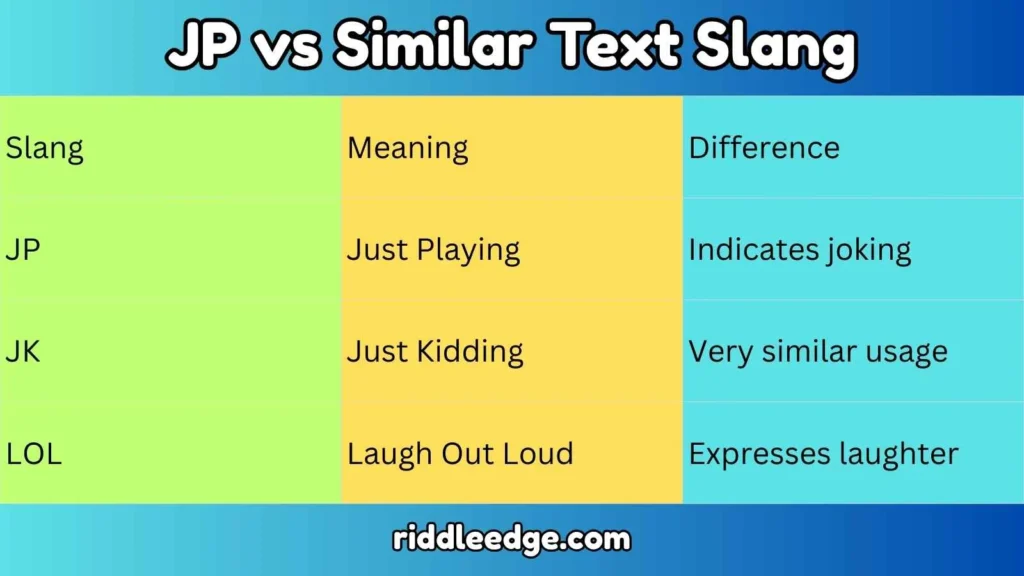
JP is often confused with other slang terms. Let’s clear that up.
| Slang | Meaning | Difference |
|---|---|---|
| JP | Just Playing | Indicates joking |
| JK | Just Kidding | Very similar usage |
| LOL | Laugh Out Loud | Expresses laughter |
Both JP and JK serve almost the same purpose, but JP feels slightly more casual and playful.
When You Should Use JP in Texting ✅
Using JP makes sense when:
- You’re joking with friends
- You want to avoid misunderstandings
- The conversation is casual
The JP meaning in text fits perfectly in relaxed, friendly environments.
When You Should NOT Use JP 🚫
Despite its usefulness, JP is not suitable everywhere.
- Professional emails
- Formal conversations
- Serious emotional discussions
In these cases, spelling things out clearly is better than relying on slang.
JP Meaning in Text for Different Age Groups 👥
Younger users (teens and early 20s) use JP more frequently.
Older users may:
- Confuse it with initials
- Ask for clarification
Knowing your audience helps you use the JP meaning in text effectively.
Real-Life Chat Examples Using JP 💬
Example 1:
“I ate your snacks… JP, they’re still here 😆”
Example 2:
“You’re grounded forever. JP 😂”
These examples show how JP instantly changes the emotional tone.
Is JP Still Relevant in 2026? 📆
Yes! Even with evolving slang, the JP meaning in text remains relevant.
Why?
- Short and easy to type
- Universally understood in casual chats
- Prevents miscommunication
FAQs
What is the most common JP meaning in text?
The most common meaning is “Just Playing”, used to show a message was a joke.
Is JP the same as JK?
Yes, both are very similar. JP means Just Playing, while JK means Just Kidding.
Can JP be used in professional texting?
It’s best avoided in professional or formal conversations.
Does JP ever have a negative meaning?
No. The JP meaning in text is generally positive and playful.
Is JP still used today?
Absolutely. JP remains common in casual chats and social media.
Final Thoughts:
The JP meaning in text may seem small, but it plays a big role in modern communication. It helps express humor, avoid misunderstandings, and keep conversations light.
Once you understand how and when to use JP, texting becomes clearer and more enjoyable. Language keeps evolving, but simple abbreviations like JP continue to connect people in meaningful ways.

I love exploring the meaning behind words and ideas, turning simple thoughts into clear and engaging content. At Punswave, I focus on explaining meanings in an easy and interesting way for everyone.