
Texting has completely changed the way we communicate. New slang terms appear almost every day, and one short word can carry multiple emotions depending on context.
One such term that often confuses people is “hu”. If you have ever received a message saying “hu?” or “hu u talking to?”, you might have paused and wondered about the hu meaning in text.
You are not alone. This tiny two-letter word has sparked curiosity across chats, social media, and comment sections. In this in-depth guide, we will explore the hu meaning in text, its origin, emotional tone, real-life examples, and how you can confidently use it in your own conversations 😊.
By the end of this article, you will fully understand what “hu” means, when to use it, and when to avoid it.
What Does “Hu” Mean in Text? 🤔
The most common hu meaning in text is a shortened or casual way of saying “who”. It is typically used in informal conversations, especially in texting, chats, or social media comments.
Instead of typing the full word “who,” many people prefer “hu” because it is faster, shorter, and feels more relaxed. This abbreviation fits perfectly into the modern texting culture where speed and simplicity matter.
Example:
“Hu is coming to the party tonight?”
In this context, “hu” simply replaces “who” without changing the meaning.
Is “Hu” Always Short for “Who”? 🧐
Not always. While “who” is the most common interpretation, the hu meaning in text can slightly change depending on context, tone, and conversation flow.
Here are the main interpretations:
- Who – The most common meaning
- Confusion or surprise – Expressing uncertainty
- Playful sarcasm – Used jokingly among friends
Understanding the context is key. The same word can sound curious, confused, or even teasing depending on how it is used.
Origin of “Hu” in Texting 📱
The rise of “hu” is closely linked to the evolution of mobile texting and instant messaging. Early mobile phones had limited keyboards, encouraging users to shorten words as much as possible.
Over time, these shortcuts became habits. Even though modern smartphones make typing easier, slang like “hu” stuck around because it feels casual and friendly.
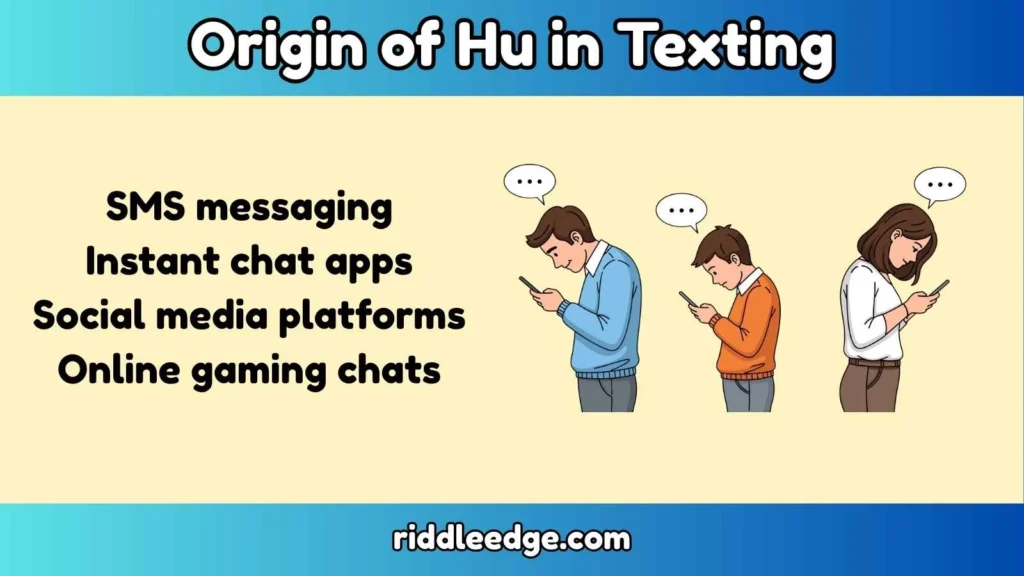
The hu meaning in text gained popularity on:
- SMS messaging
- Instant chat apps
- Social media platforms
- Online gaming chats
This evolution shows how language naturally adapts to technology 🚀.
How “Hu” Is Commonly Used in Conversations 💬
People usually use “hu” when asking quick questions or responding casually. It often appears in short messages where clarity is already understood.
Here are some common patterns:
- “Hu told you that?”
- “Hu r u with?”
- “Hu dis?”
In all these cases, the hu meaning in text is clearly “who,” and the message remains easy to understand.
Emotional Tone of “Hu” 😮😄
The emotional tone of “hu” depends heavily on context. This is where experience matters in understanding digital language.
Let’s break it down:
- Neutral: “Hu is calling me?”
- Curious: “Hu did you meet there?”
- Playful: “Hu do u think u are? 😜”
- Confused: “Hu?? I don’t get it.”
This flexibility makes “hu” a powerful yet simple slang term.
Hu Meaning in Text vs Formal Writing ✍️
It is important to note that “hu” is strictly informal. You should never use it in:
- Professional emails
- Academic writing
- Business communication
- Formal documents
In these cases, always use the correct word “who”. Using “hu” outside casual settings can appear careless or unprofessional.
Examples of “Hu” in Real-Life Texts 📲
Seeing real examples makes understanding easier. Below are common text scenarios:
“Hu are you texting so late?”
“Hu wants pizza tonight?”
“Hu was that guy u met?”
Each example shows how natural and effortless “hu” feels in casual messaging.
Table: Hu Meaning in Different Contexts 📊
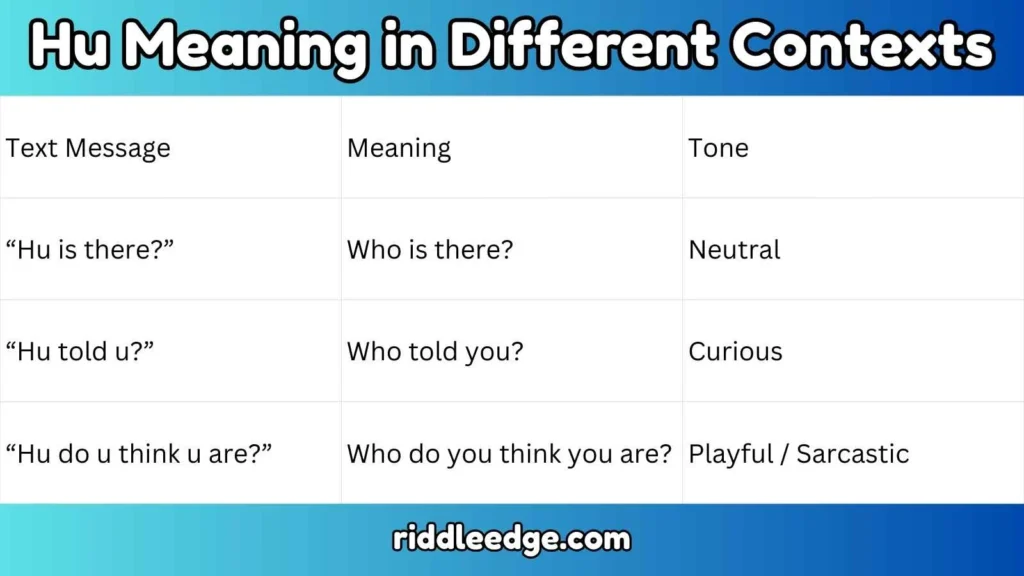
| Text Message | Meaning | Tone |
|---|---|---|
| “Hu is there?” | Who is there? | Neutral |
| “Hu told u?” | Who told you? | Curious |
| “Hu do u think u are?” | Who do you think you are? | Playful / Sarcastic |
Is “Hu” Considered Slang? 🗣️
Yes, “hu” is considered modern slang. It is part of digital shorthand language used mainly by younger generations and frequent texters.
The hu meaning in text falls under:
- Internet slang
- Texting abbreviations
- Casual speech patterns
Slang evolves quickly, but “hu” has remained relevant because of its simplicity.
When Should You Use “Hu”? ✅
Use “hu” when:
- Chatting with friends or family
- Texting casually
- Commenting on social media
- Gaming or group chats
In these settings, “hu” feels natural and friendly 😊.
When Should You Avoid “Hu”? ❌
Avoid using “hu” when:
- Writing professionally
- Communicating with clients
- Sending formal messages
- Talking to someone who may not understand slang
Choosing the right tone builds trust and clarity.
Hu Meaning in Text on Social Media 📢
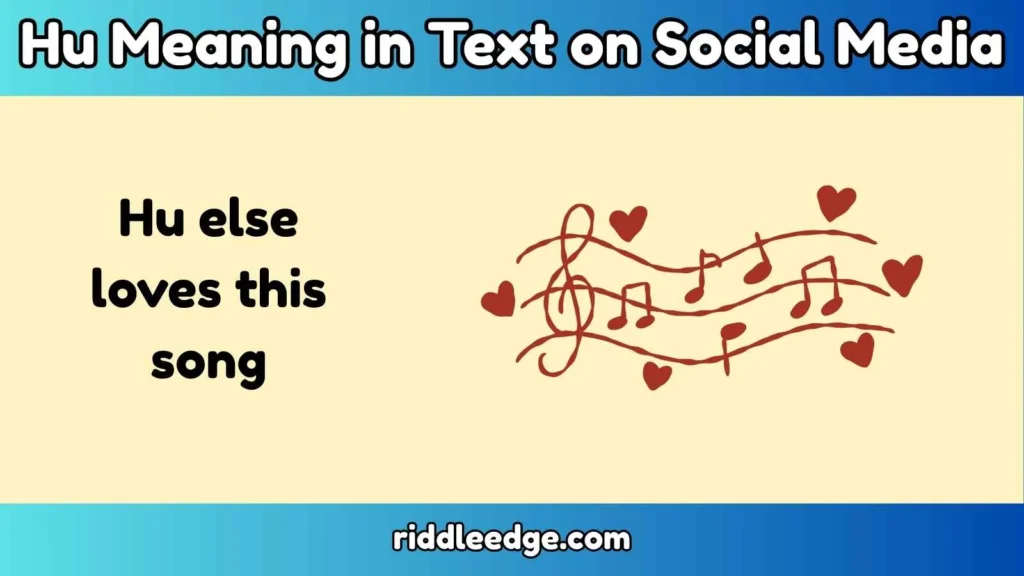
On social platforms, “hu” is often used in comments and replies. It adds a conversational tone and keeps interactions light.
Example:
“Hu else loves this song? 🎶”
Here, the slang encourages engagement and feels inviting.
Common Variations of “Hu” 🔄
People often mix “hu” with other abbreviations:
- Hu r u? – Who are you?
- Hu dis? – Who is this?
- Hu u with? – Who are you with?
These variations follow the same informal structure.
FAQs
What is the basic hu meaning in text?
The basic meaning of “hu” in text is “who”. It is a casual abbreviation used in informal chats.
Is “hu” rude or disrespectful?
No, “hu” is not rude by itself. However, tone and context matter. In formal situations, it may seem inappropriate.
Can adults use “hu” in texting?
Yes. Anyone can use “hu” as long as the conversation is informal and the other person understands slang.
Is “hu” used worldwide?
Yes, English speakers across different regions use “hu” in digital conversations.
Conclusion:
Understanding the hu meaning in text helps you communicate more confidently in today’s digital world. This small abbreviation carries a simple meaning but plays a big role in casual conversations.
Remember, “hu” is best used informally, adds a friendly tone, and keeps chats light and fast. Knowing when and how to use it shows awareness of modern language trends and social context.
Language continues to evolve, and staying informed keeps your communication clear and engaging 💡.

I love exploring the meaning behind words and ideas, turning simple thoughts into clear and engaging content. At Punswave, I focus on explaining meanings in an easy and interesting way for everyone.
Related posts:
 GM Meaning in Text Explained Clearly – What It Really Means in Chats & Messages 2026
 WYS meaning in text Explained Clearly – The Simple Truth You Need Now 2026
 SU Meaning in Text Explained Clearly – What It Really Means in Messages 2026
 TMI Meaning in Text Clearly Explained – The Simple Truth Everyone Wants to Know 2026