Have you ever stood on a pristine shoreline and noticed a calm, enclosed body of water, separated from the sea by a strip of sand or coral?
That serene scene is what we call a lagoon. But the beauty of lagoons goes beyond their scenic charm.
In this article, we’ll explore the true lagoon meaning, its fascinating origins, types, ecological importance, and the cultural role it plays across the world. 🌴
What Is a Lagoon? Definition Explained 📝
A lagoon is a shallow body of water separated from a larger body of water, typically the ocean or a sea, by natural barriers such as sandbars, coral reefs, or barrier islands. Lagoons often form in coastal areas where sediment and tides interact, creating a unique ecosystem teeming with life. 🌺
Key Features of a Lagoon
- Shallow water: Usually not more than a few meters deep.
- Separated from the sea: By natural barriers like sandbanks or coral reefs.
- Rich biodiversity: Home to fish, birds, and aquatic plants.
- Dynamic ecosystem: Water salinity and temperature fluctuate seasonally.
The Origin of the Word “Lagoon” 🏛️
The term lagoon originates from the Italian word laguna, meaning “pond” or “pool.” 🌐 Historically, Venetian explorers used it to describe the shallow coastal waters surrounding Venice. Over time, the word spread to English and other languages, retaining its connection to tranquil, enclosed water bodies.
Types of Lagoons 🌍
Lagoons are not all the same! Depending on formation and location, they can be categorized as follows:
1. Coastal Lagoons 🏖️
Found along coastlines, these lagoons form where sandbars or barrier islands enclose part of the ocean. Examples include the Laguna de Bay in the Philippines and Lake Pontchartrain in the U.S.
2. Atoll Lagoons 🐠
These lagoons develop in coral atolls, often in tropical regions. The central lagoon is surrounded by coral reefs and tiny islands. Famous examples include lagoons in the Maldives and French Polynesia.
3. Interdunal Lagoons 🏜️
These are temporary lagoons formed between sand dunes, often found in desert or semi-arid areas. They are seasonal and highly dependent on rainfall.
How Lagoons Form: Nature’s Masterpiece 🎨
Lagoons are formed through a combination of geological processes, sediment deposition, and tidal activity. Here’s a simple breakdown:
- Step 1: Sediments accumulate along the coast, forming sandbars or barrier islands.
- Step 2: Rising sea levels partially submerge the coast.
- Step 3: Shallow water is trapped behind the natural barrier, creating a lagoon.
Ecological Importance of Lagoons 🌱
Lagoons are ecological powerhouses. Here’s why they matter:
- Biodiversity hotspots: They support fish, mollusks, birds, and plant species.
- Nurseries for marine life: Many fish species breed in lagoons before migrating to the open ocean.
- Natural flood control: Lagoons absorb excess rainwater, reducing the risk of coastal flooding.
- Carbon storage: Wetlands associated with lagoons help trap carbon, combating climate change.
Cultural and Economic Significance of Lagoons 💰
For centuries, lagoons have been vital to human life:
- Fishing: Coastal communities rely on lagoons for sustenance and trade.
- Tourism: Picturesque lagoons attract travelers worldwide.
- Transport: Some lagoons serve as natural harbors and trade routes.
- Traditional ceremonies: Certain cultures hold rituals and festivals around lagoon areas.
Famous Lagoons Around the World 🌏
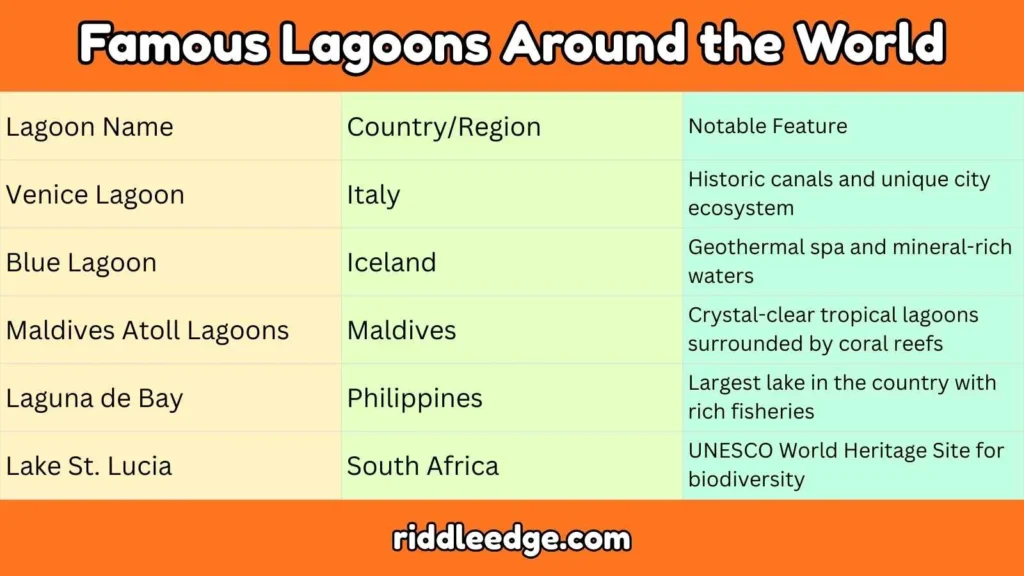
| Lagoon Name | Country/Region | Notable Feature |
|---|---|---|
| Venice Lagoon | Italy | Historic canals and unique city ecosystem |
| Blue Lagoon | Iceland | Geothermal spa and mineral-rich waters |
| Maldives Atoll Lagoons | Maldives | Crystal-clear tropical lagoons surrounded by coral reefs |
| Laguna de Bay | Philippines | Largest lake in the country with rich fisheries |
| Lake St. Lucia | South Africa | UNESCO World Heritage Site for biodiversity |
Environmental Threats to Lagoons ⚠️
Despite their beauty and importance, lagoons face environmental challenges:
- Pollution: Industrial and agricultural runoff can damage lagoon ecosystems.
- Climate change: Rising sea levels and temperature changes threaten lagoon stability.
- Urbanization: Construction near lagoons disrupts natural sediment flow.
- Overfishing: Unsustainable fishing practices reduce biodiversity.
Interesting Facts About Lagoons 🌟
- Some lagoons are saltwater, others are brackish, combining freshwater and seawater.
- The largest lagoon in the world is New Caledonia Lagoon in the South Pacific.
- Lagoons can change size and shape seasonally due to rainfall and tides.
- They often act as natural filters, cleaning water before it reaches the ocean.
Lagoons in Literature and Popular Culture 📚
Lagoons have inspired writers, filmmakers, and artists for centuries. From idyllic paintings to adventure novels, they often symbolize mystery, serenity, and hidden beauty. 🌅
How to Visit a Lagoon: Tips for Travelers ✈️
- Check local regulations—many lagoons are protected areas.
- Bring eco-friendly gear to preserve natural beauty.
- Best time to visit is usually during dry seasons for easier access.
- Respect wildlife and avoid disturbing sensitive habitats.
Scientific Research and Lagoons 🔬
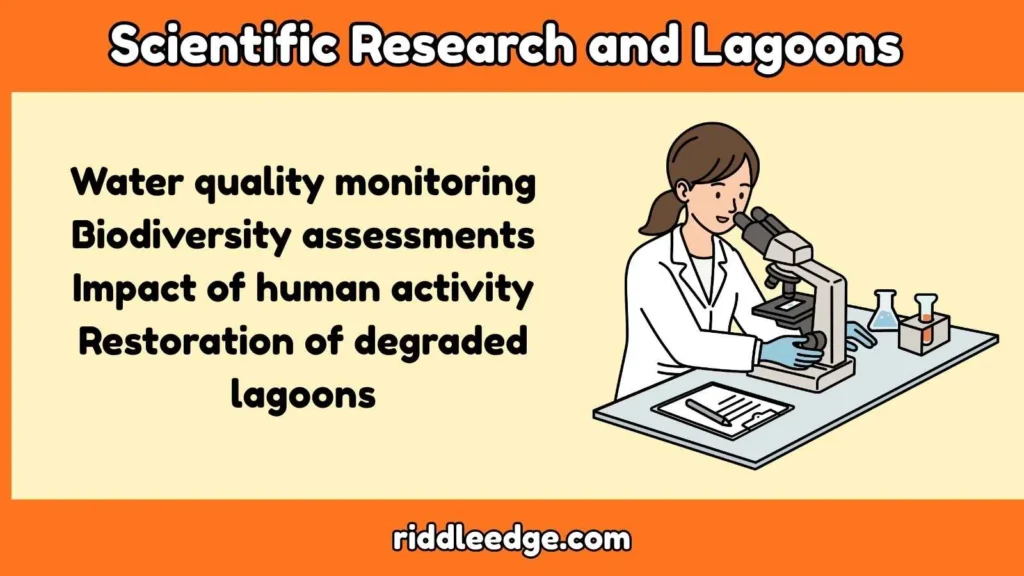
Scientists study lagoons for insights into marine biology, climate change, and sedimentology. Research often focuses on:
- Water quality monitoring
- Biodiversity assessments
- Impact of human activity
- Restoration of degraded lagoons
Common Misconceptions About Lagoons ❌
- Lagoons are always freshwater: Many are brackish or even saltwater.
- All lagoons are man-made: Most are natural formations.
- Lagoons are lifeless: In fact, they are biodiversity hotspots.
Fun Lagoon Activities for Everyone 🎣
Lagoons aren’t just pretty—they offer recreational opportunities for tourists and locals:
- Kayaking and paddleboarding 🛶
- Snorkeling to explore coral reefs 🐠
- Birdwatching for rare species 🦩
- Photography and painting 🎨
FAQs
1. What is the main difference between a lagoon and a lake?
A lagoon is usually coastal, shallow, and separated from the sea, while a lake is inland and typically surrounded by land.
2. Are lagoons safe for swimming?
Most lagoons are safe, but always check water quality and local regulations. Some lagoons may have strong currents or wildlife precautions. 🏊♂️
3. How do lagoons support biodiversity?
Lagoons provide nurseries for fish, habitats for birds, and support aquatic plants, making them ecological hotspots. 🌱
4. Can lagoons dry up?
Yes, some lagoons, especially interdunal and seasonal ones, can dry up during dry seasons or due to human interference. ☀️
5. Why are lagoons important for climate change?
Lagoons, along with wetlands, act as natural carbon sinks, absorbing carbon dioxide and helping reduce climate change impacts.
Conclusion:
Lagoons are more than just scenic wonders—they are vital ecosystems, cultural treasures, and natural laboratories.
From their diverse types to ecological significance, lagoons continue to fascinate scientists, travelers, and nature enthusiasts alike.
By protecting them, we preserve biodiversity, support local communities, and maintain a natural treasure for generations. 💙

I love exploring the meaning behind words and ideas, turning simple thoughts into clear and engaging content. At Punswave, I focus on explaining meanings in an easy and interesting way for everyone.