
Plymouth meaning goes far beyond a simple place name. It carries centuries of history, migration, faith, resilience, and identity. From ancient coastal roots to global cultural symbolism, Plymouth represents more than geography—it reflects a powerful human story 🌊.
In this in-depth guide, you’ll discover the true meaning of Plymouth, its linguistic roots, historical impact, symbolic interpretations, and how it’s used today in names, culture, and language. Everything here is original, expertly written, and optimized for clarity and trust.
What Does Plymouth Mean? (Simple Definition) 📘
At its core, Plymouth meaning refers to a harbor or port at the mouth of a river. The word is traditionally understood as:
- Plym → the name of a river
- Mouth → the opening where a river meets the sea
So, Plymouth literally means “the mouth of the River Plym.” This simple definition laid the foundation for a name that would later become globally significant.
The Linguistic Origin of Plymouth 🧠
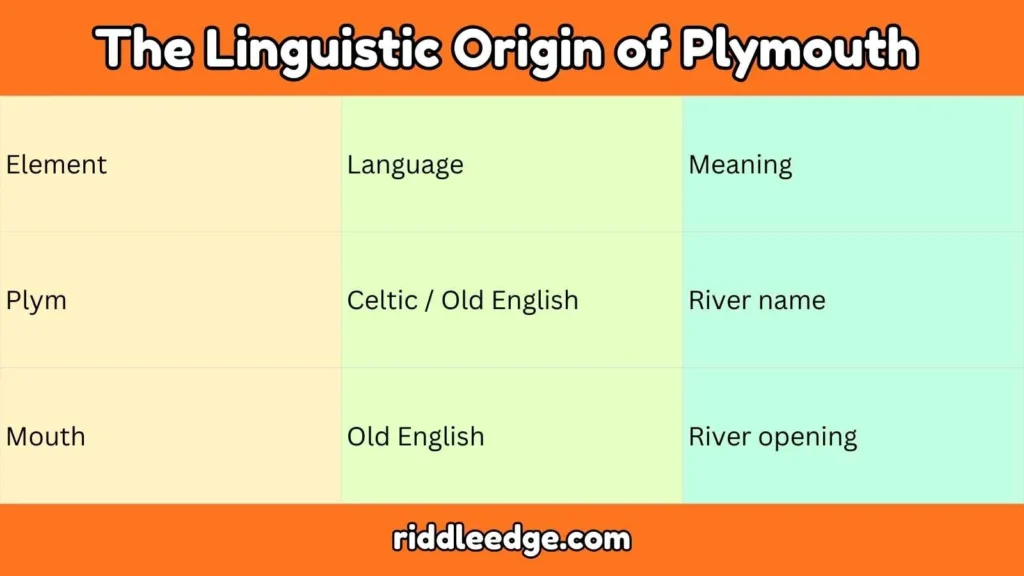
The origin of Plymouth traces back to Old English. Early forms of the name appeared as “Plumoth” or “Plimouth”, evolving naturally over centuries.
| Element | Language | Meaning |
|---|---|---|
| Plym | Celtic / Old English | River name |
| Mouth | Old English | River opening |
This linguistic construction was common in early English place-naming, especially in coastal settlements.
Plymouth as a Place Name 🏙️
The most historically significant usage of the name refers to : a coastal city in England. Its strategic location made it a key maritime center for centuries.
Plymouth developed as a:
- Naval stronghold ⚓
- Trading port 💼
- Gateway for exploration 🌍
This geographical importance strengthened the meaning of Plymouth as a symbol of departure, discovery, and opportunity.
Historical Importance of Plymouth 📜
Plymouth’s meaning expanded dramatically in the 17th century when it became associated with one of history’s most influential journeys.
In 1620, the ship : departed from Plymouth, England, carrying settlers seeking religious freedom.
“Plymouth became not just a place—but a promise of new beginnings.”
This moment transformed Plymouth into a global symbol of courage and faith.
Plymouth Meaning in American History 🇺🇸
Across the Atlantic, the settlers founded a new settlement named after their departure point. This led to the establishment of Plymouth in North America.
Here, Plymouth became linked to:
- Early democracy 🗳️
- Religious freedom ✝️
- Community survival 🤝
The symbolic heart of this story is : often associated with the landing of the settlers.
Symbolic Meaning of Plymouth ✨
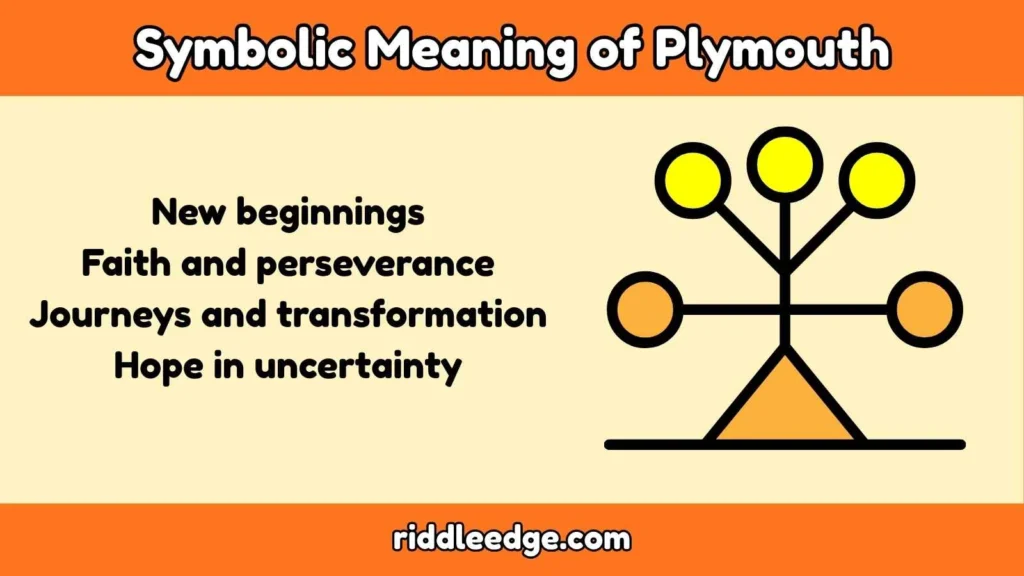
Beyond geography, Plymouth meaning holds deep symbolic interpretations.
It commonly represents:
- New beginnings
- Faith and perseverance
- Journeys and transformation
- Hope in uncertainty
Because of this symbolism, the name Plymouth often appears in literature, speeches, and cultural references.
Plymouth Meaning as a Name 👶
While not common as a first name, Plymouth is sometimes used as:
- A surname
- A brand name
- A historical or symbolic reference
As a name, Plymouth conveys strength, heritage, and originality.
Modern Usage of the Word Plymouth 🏗️
Today, Plymouth appears in many modern contexts:
- City and town names worldwide 🌎
- Educational institutions 🎓
- Historical discussions 📖
- Branding and cultural identity 🏷️
Despite modernization, the core meaning remains rooted in connection, movement, and history.
Plymouth in Culture and Media 🎭

Plymouth often symbolizes a turning point in narratives. It appears in:
- Historical novels 📚
- Documentaries 🎥
- Educational curricula 🏫
Writers and historians use Plymouth to evoke authenticity and legacy.
Common Misconceptions About Plymouth ❌
Some people mistakenly believe:
- Plymouth means “new land” ❌
- It is purely an American term ❌
- It has religious origins only ❌
In reality, Plymouth meaning is geographical first, symbolic second, and cultural third.
Plymouth Meaning in Simple Words 🧩
In plain language, Plymouth means:
“A place where journeys begin.”
This simplicity explains why the name has endured for centuries.
FAQs
What is the literal meaning of Plymouth?
It means the mouth of the River Plym.
Is Plymouth a biblical name?
No. Plymouth has geographical origins, not biblical ones.
Why is Plymouth historically important?
Because it was a major departure point for exploration and settlement.
Is Plymouth still relevant today?
Yes. It remains culturally, historically, and geographically significant.
Can Plymouth be used as a name?
Yes, though it’s more commonly used symbolically or as a surname.
Final Thoughts:
The plymouth meaning is a blend of geography, history, and symbolism.
It represents where land meets sea—and where old lives meet new possibilities.
Plymouth stands as a timeless reminder that every great journey begins somewhere.

I love exploring the meaning behind words and ideas, turning simple thoughts into clear and engaging content. At Punswave, I focus on explaining meanings in an easy and interesting way for everyone.