In today’s fast-paced digital world, texting shorthand and acronyms have become second nature.
One such term that has caused both curiosity and concern is “kys”. If you’ve ever stumbled upon this abbreviation in a chat and felt unsure about its meaning, you’re not alone.
This guide dives deep into what kys means in text, its origins, how it’s used, and what you should know for safe digital communication. 🌐✨
What Does “kys” Mean in Text? 🤔
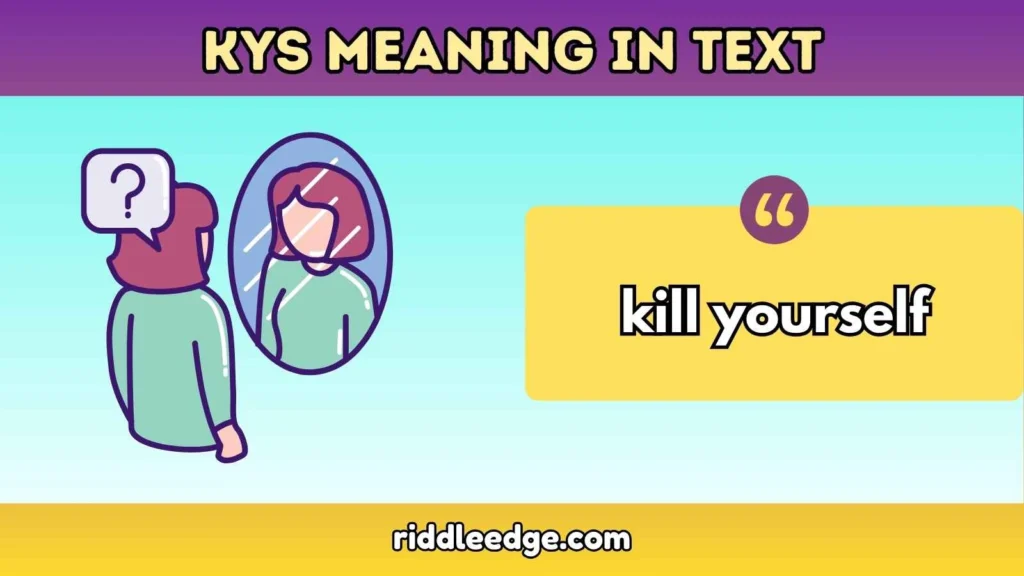
The acronym kys stands for “kill yourself”. It is a highly sensitive and potentially harmful term used primarily in online conversations. While it may appear casually in memes or gaming chats, its literal meaning is serious and should never be taken lightly. ⚠️
Despite its shocking meaning, the abbreviation has also been misused for humor in certain internet subcultures, though this is controversial and potentially dangerous. Understanding its usage context is crucial to navigating digital communication safely.
The Origin of “kys” 📜
The use of “kys” originated in early internet forums and chat rooms where brevity was essential. Typing long phrases was cumbersome, and acronyms became a linguistic shortcut. Unfortunately, some acronyms, like kys, carried negative connotations.
Over time, kys spread to social media platforms, online games, and messaging apps. Awareness of its meaning has increased due to public campaigns on mental health and safe online behavior. 💡
Timeline of “kys” Usage Online
- 2000s: Early internet forums use “kys” as a crude insult.
- 2010s: Acronym spreads in gaming communities and memes.
- 2020s: Mental health awareness campaigns warn about its harmful impact.
Common Contexts Where “kys” Appears 💬
The abbreviation shows up in various digital spaces. Some of the most common include:
- Gaming chats: Online games where competitiveness can lead to toxic language.
- Social media: Platforms like Twitter, TikTok, and Instagram may feature “kys” in comments or posts.
- Text messages: Casual messaging among peers, often inappropriately joking.
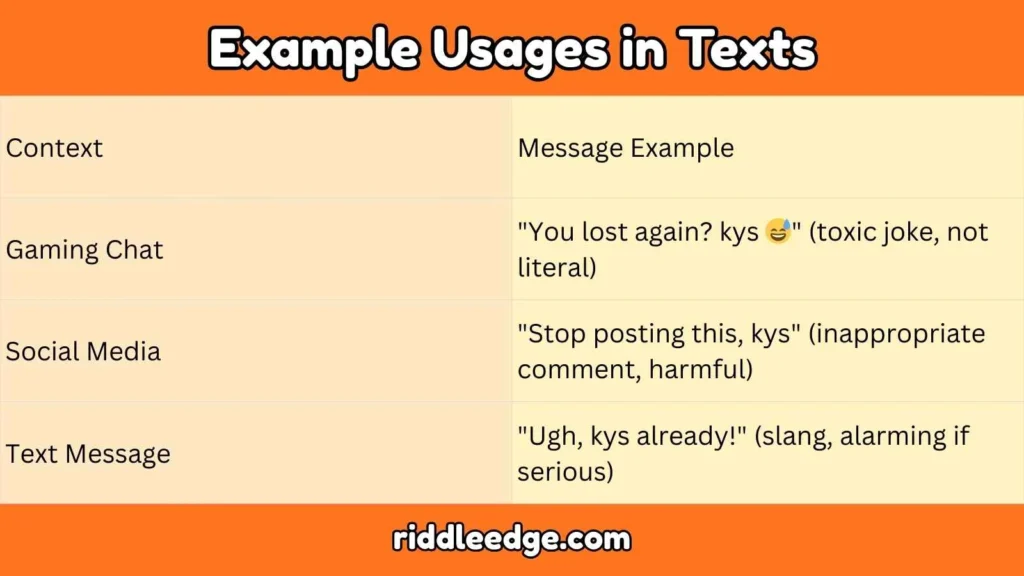
Example Usages in Texts
| Context | Message Example |
|---|---|
| Gaming Chat | “You lost again? kys 😅” (toxic joke, not literal) |
| Social Media | “Stop posting this, kys” (inappropriate comment, harmful) |
| Text Message | “Ugh, kys already!” (slang, alarming if serious) |
Why You Should Avoid Using “kys” 🚫
Even when used jokingly, kys can be deeply hurtful. Here’s why you should never send it:
- Emotional Harm: It may trigger feelings of depression or anxiety.
- Legal Implications: Some countries treat online threats seriously.
- Social Responsibility: Promotes toxic online culture.
Safer Alternatives to Express Frustration 😤
Instead of using harmful acronyms, try these safer ways:
- “I’m so frustrated! 😓”
- “This is annoying 😬”
- “I can’t deal with this right now 😅”
kys in Gaming Communities 🎮

Gaming communities often feature fast-paced communication. Unfortunately, kys appears in heated moments as a form of trash talk. While some players use it jokingly, professional streamers and moderators strongly discourage it.
Example Scenario in Gaming Chat
“Noob team! kys 😂” – This is a common but harmful type of message in multiplayer games. Moderators usually delete or warn about such messages.
Recognizing Serious vs. Joking Usage 🕵️♂️
It’s essential to differentiate between harmless internet humor and genuine threats. Signs of serious usage include:
- Direct messages targeting someone personally.
- Repeated aggressive messages.
- Messages from individuals showing signs of distress.
The Psychological Impact of Seeing “kys” 💔

Studies show that exposure to harmful online messages can:
- Increase anxiety or depression
- Trigger past trauma
- Lead to negative coping mechanisms
Understanding these impacts helps foster empathy and caution when communicating online. 🌱
Handling “kys” Messages Safely 🛡️
If you encounter kys in a chat or text:
- Do not respond aggressively.
- Report or block the sender if necessary.
- Reach out for support if the message affects you emotionally.
Preventing Cyberbullying with Awareness 💡
Cyberbullying often includes acronyms like kys. Promoting awareness, encouraging safe communication, and teaching empathy are essential steps for digital safety. 🛡️
Educational Resources and Help Links 📚
- Reach out to friends, family, or counselors for support.
- Use online mental health resources like hotlines and websites.
- Engage in positive online communities that discourage harmful language.
Other Texting Acronyms to Watch Out For 📝
Similar acronyms include:
- stfu – shut the f*** up
- gtfo – get the f*** out
- lmao – laughing my a** off (harmless)
Using Humor Responsibly in Texts 😂
Internet slang is fun when used responsibly. Always ensure that your jokes do not harm others. Humor should uplift, not hurt. 🌟
FAQs
1. Is “kys” always a threat?
Not always. Sometimes it’s used jokingly in memes or gaming chats, but it’s never appropriate to send seriously.
2. How can I respond if someone texts “kys” to me?
Stay calm, avoid responding aggressively, and consider blocking or reporting the sender.
3. Can “kys” affect mental health?
Yes. Exposure to harmful acronyms can trigger anxiety, depression, or emotional distress.
4. Are there safer acronyms to use online?
Yes. Positive or neutral acronyms like “lol,” “brb,” or “smh” are safer and widely accepted.
5. How can parents and educators prevent harmful texting?
By teaching digital etiquette, monitoring online behavior, and encouraging open communication about mental health.
Conclusion
Understanding the meaning of kys in text is vital for responsible online communication.
While it may appear casually, its real-life implications are serious.
Awareness, empathy, and safe texting practices can prevent harm and foster a healthier online environment. 🌐💖

I love exploring the meaning behind words and ideas, turning simple thoughts into clear and engaging content. At Punswave, I focus on explaining meanings in an easy and interesting way for everyone.