LOL meaning in text is one of the most searched slang explanations online—and for a good reason. You’ve probably seen it in chats, comments, captions, or messages countless times. But here’s the truth: LOL doesn’t always mean what people think it means. 😄
In today’s fast-moving digital conversations, words evolve quickly. Abbreviations like LOL are no longer just shortcuts—they carry emotion, tone, and intent. Whether you’re texting a friend, replying to a comment, or reading a message that simply says “lol,” understanding its real meaning can change how you interpret the conversation.
This in-depth guide explains LOL meaning in text clearly, naturally, and accurately—based on real usage, not outdated definitions.
What Does LOL Mean in Text?
LOL stands for “Laughing Out Loud.” In texting and online messaging, it’s used to express amusement, humor, or light-heartedness.
However, modern usage has evolved. Today, LOL often doesn’t mean actual laughter. Instead, it works as a tone softener, reaction filler, or social signal.
Simple definition:
LOL is a casual internet slang term used to show amusement, ease tension, or signal friendliness in text-based conversations.
So when someone texts “lol,” they may not be laughing—but they are communicating something emotionally. 😊
Origin of LOL: Where Did It Come From?
The origin of LOL dates back to the early days of the internet in the 1980s and 1990s. It first appeared in online forums, chat rooms, and early instant messaging platforms.
Back then, LOL truly meant laughing out loud. Users typed it to replace physical laughter in text-only conversations.
Timeline of LOL:
- 📟 1980s – Early bulletin board systems
- 💬 1990s – Internet chat rooms & instant messaging
- 📱 2000s – SMS texting and social media
- 🌍 Today – Global slang with multiple meanings
As digital communication grew, LOL meaning in text shifted from literal laughter to emotional expression.
How LOL Is Commonly Used in Text Messages
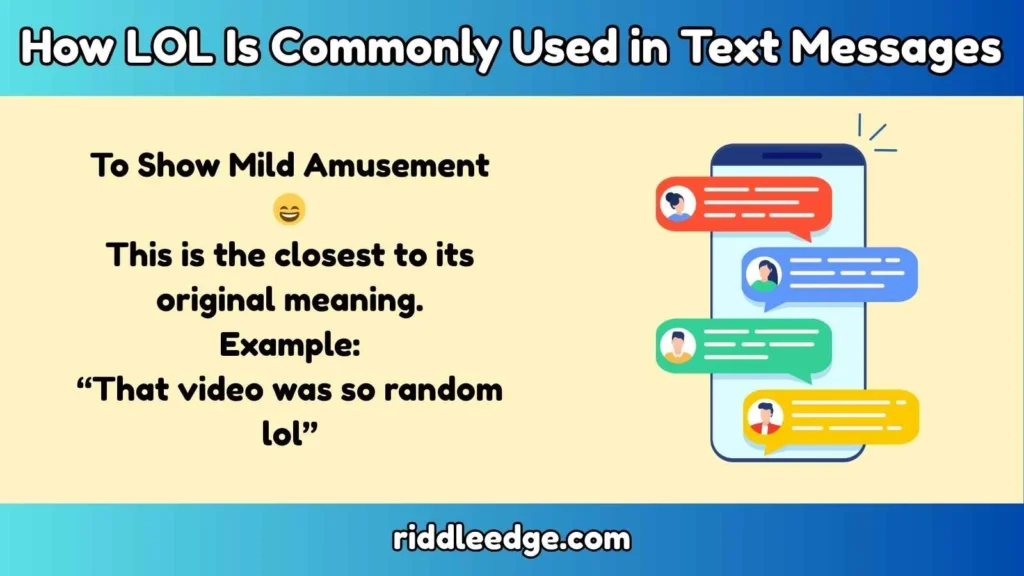
LOL appears in conversations for many reasons. Its meaning depends on context, tone, and placement.
1. To Show Mild Amusement 😄
This is the closest to its original meaning.
Example:
“That video was so random lol”
2. To Soften a Message
LOL can make a message feel less serious or less harsh.
“I’m not mad lol just surprised”
3. To Avoid Awkward Silence
Sometimes LOL is used when someone doesn’t know what else to say.
“Yeah… lol”
4. To Signal Friendliness
It shows the sender is relaxed and approachable.
“Sure, that works lol”
Different Meanings of LOL Based on Context
| Context | Meaning |
|---|---|
| Funny situation | Genuine amusement |
| Serious topic | Discomfort or sarcasm |
| Short reply | Conversation filler |
| Argument | Passive tone or deflection |
This flexibility is why LOL meaning in text can sometimes feel confusing.
Is LOL Still Popular Today?
Yes—but its usage has changed. While younger users may prefer emojis or alternatives like “lmao” or “haha,” LOL remains widely used across age groups.
It’s especially common in:
- Text messages 📱
- Social media comments 💬
- Casual work chats 💼
- Online gaming 🎮
Its simplicity keeps it relevant.
LOL vs Haha vs LMAO: What’s the Difference?
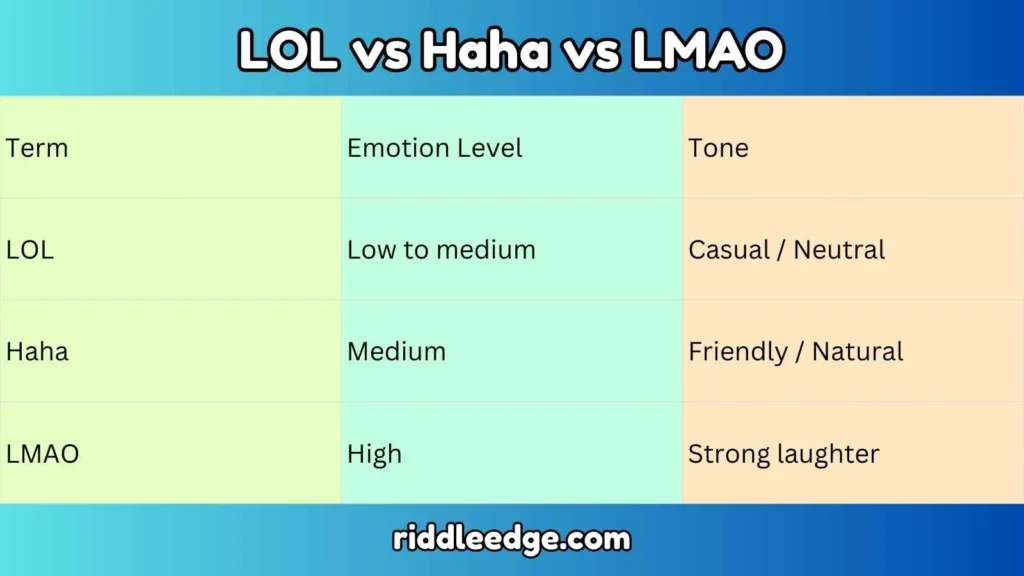
| Term | Emotion Level | Tone |
|---|---|---|
| LOL | Low to medium | Casual / Neutral |
| Haha | Medium | Friendly / Natural |
| LMAO | High | Strong laughter |
LOL is often the safest and most neutral option.
Is LOL Formal or Informal?
LOL is informal. It should only be used in casual conversations.
Avoid using LOL in:
- Professional emails ❌
- Academic writing ❌
- Formal business communication ❌
It’s best suited for relaxed, friendly interactions.
Can LOL Be Sarcastic?
Yes. In some contexts, LOL can express sarcasm or disbelief.
“They canceled again lol”
Here, LOL signals frustration rather than humor.
Psychology Behind Using LOL
People use LOL to:
- Reduce tension 😌
- Appear friendly 🤝
- Mask discomfort 😅
- Keep conversations flowing 💬
It acts as a social lubricant in digital communication.
Examples of LOL in Real Conversations
“I forgot my keys again lol”
“That’s actually funny lol”
“I don’t know what to say lol”
Each example carries a different emotional weight.
Common Misunderstandings About LOL
- ❌ It always means laughing
- ❌ It’s rude
- ❌ It’s outdated
In reality, LOL is context-driven and emotionally flexible.
How to Respond When Someone Says LOL
You can reply by:
- Continuing the topic
- Using an emoji 😊
- Adding humor
There’s no single correct response.
LOL in Different Generations
Older users may use LOL literally. Younger users often use it ironically or casually.
Understanding generational context helps avoid misinterpretation.
FAQs
What does LOL mean in text today?
Today, LOL often means friendliness or light tone rather than real laughter.
Is LOL rude?
No. It’s usually friendly, but context matters.
Can LOL mean sarcasm?
Yes, especially in serious or frustrating situations.
Should I use LOL in professional messages?
No. LOL is best for casual communication.
Is LOL outdated slang?
No. Its meaning has evolved, but it’s still widely used.
Final Thoughts:
The LOL meaning in text goes far beyond “laughing out loud.”
It’s a versatile expression that reflects emotion, tone, and intent in digital conversations.
Understanding how and why people use LOL helps you communicate more clearly and confidently.
Language evolves—and LOL is proof of that. 😄

I love exploring the meaning behind words and ideas, turning simple thoughts into clear and engaging content. At Punswave, I focus on explaining meanings in an easy and interesting way for everyone.